
Introversion, Shyness, Social Anxiety and Sensitivity Are Different Things
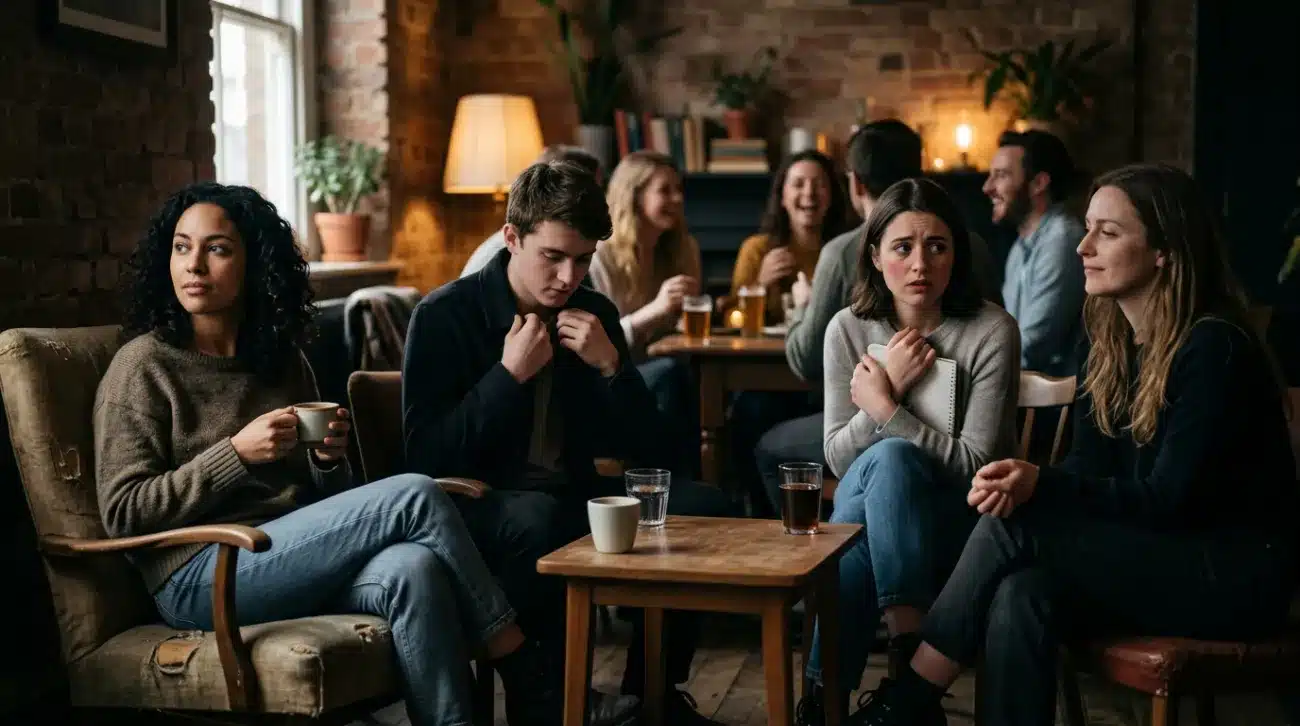
Social fatigue is often confused with related experiences that psychologists treat as distinct. Shyness generally refers to discomfort or inhibition around others, often tied to fear of judgment, whereas introversion is better described as a preference for lower levels of social stimulation and more time alone. Social anxiety disorder is a recognized mental health condition characterized by intense fear of social situations and can cause significant distress or avoidance. A person can be an introvert without being anxious, and an extravert can experience social anxiety.
Another related idea is sensory processing sensitivity, a trait studied by the psychologist Elaine Aron, which describes people who process sensory and emotional information more deeply and may become overwhelmed more easily. The trait overlaps with introversion for some people but is conceptually separate. These distinctions matter because the right response differs: ordinary tiredness after socializing generally calls for rest, while persistent dread, avoidance or distress may be worth discussing with a qualified health professional.
Recovering Energy After Social Events Without Withdrawing From Life

Because the research does not point to a single fix, the most defensible advice is modest and practical. Many introverts report that planning recovery time after demanding events helps, whether that means a quiet walk, time with a book or simply an hour without conversation. Choosing smaller gatherings, arriving with a clear idea of when to leave, or stepping outside briefly during a long event can also reduce the sense of being overwhelmed. These are common coping strategies rather than clinically proven treatments, and what works varies from person to person.
It can also help to communicate openly with friends, family and colleagues. Explaining that needing quiet afterward is not a rejection of anyone can prevent misunderstandings. In workplaces, people who find large meetings tiring may prefer to contribute in writing or in smaller sessions, and managers can support this by offering more than one way to take part. Seeking out deeper one-on-one conversations, which many introverts find more satisfying than broad small talk, can make social life feel nourishing rather than costly.
Key takeaway
Post-conversation fatigue in introverts likely reflects a mix of stimulation, attention demands and social effort, rather than any dislike of people. Scientists continue to refine the explanations, so the experience is best understood as one common pattern within normal personality variation.
Understanding Your Limits Once the Group Conversation Ends

The tiredness many introverts feel after group conversations is best seen as a meeting point of several factors rather than the product of a single cause: possible differences in arousal and reward, the sustained attention that group talk demands, and the effort of adapting to social norms that favor fast, outgoing styles. The science is still evolving, and the social battery remains a metaphor rather than a measured mechanism, but the experience itself is widely recognized and entirely ordinary. Knowing that it differs from shyness and from social anxiety can help people respond with rest and planning instead of self-criticism, and seek professional support if distress or avoidance becomes persistent. Respecting your own pace is not a retreat from connection; for many introverts, it is what makes meaningful connection sustainable.