Things People Do That Instantly Kill the Vibe
Understanding the social behaviors that disrupt group harmony and emotional connection in everyday interactions
Social interactions carry an invisible yet palpable energy that behavioral scientists refer to as collective emotional states. When someone does something that instantly kills the vibe, they disrupt this shared emotional experience in ways that can shift an entire room’s atmosphere within seconds. Research in social psychology has documented how certain behaviors create what experts call “social friction”—actions that interrupt positive group dynamics and trigger discomfort among those present. Understanding these behaviors is not about judgment but rather about developing greater social awareness, a skill that psychological research consistently links to stronger relationships and improved well-being.
The Psychology Behind Social Atmosphere Disruption
Human beings are remarkably attuned to social cues, a trait that evolutionary psychologists attribute to our species’ survival as social creatures. The concept of emotional contagion, first formally studied by psychologist Elaine Hatfield and colleagues in the 1990s, demonstrates that emotions spread between people through facial expressions, vocal tones, and body language. When one person introduces negativity or awkwardness into a social setting, others unconsciously absorb and mirror these emotional signals.
The amygdala, a region of the brain responsible for processing emotional stimuli, responds to social threats with remarkable speed—often before conscious awareness occurs. This neurological reality explains why a single comment or behavior can shift group energy almost instantaneously. People don’t choose to feel uncomfortable; their brains register the disruption automatically, altering the collective experience before anyone can consciously process what happened.
Editorial Context
While specific behaviors may vary in impact depending on cultural norms and individual relationships, research consistently shows that violations of expected social conduct create measurable physiological stress responses in observers, including elevated cortisol levels and increased heart rate.
Constant Phone Checking and Digital Distraction
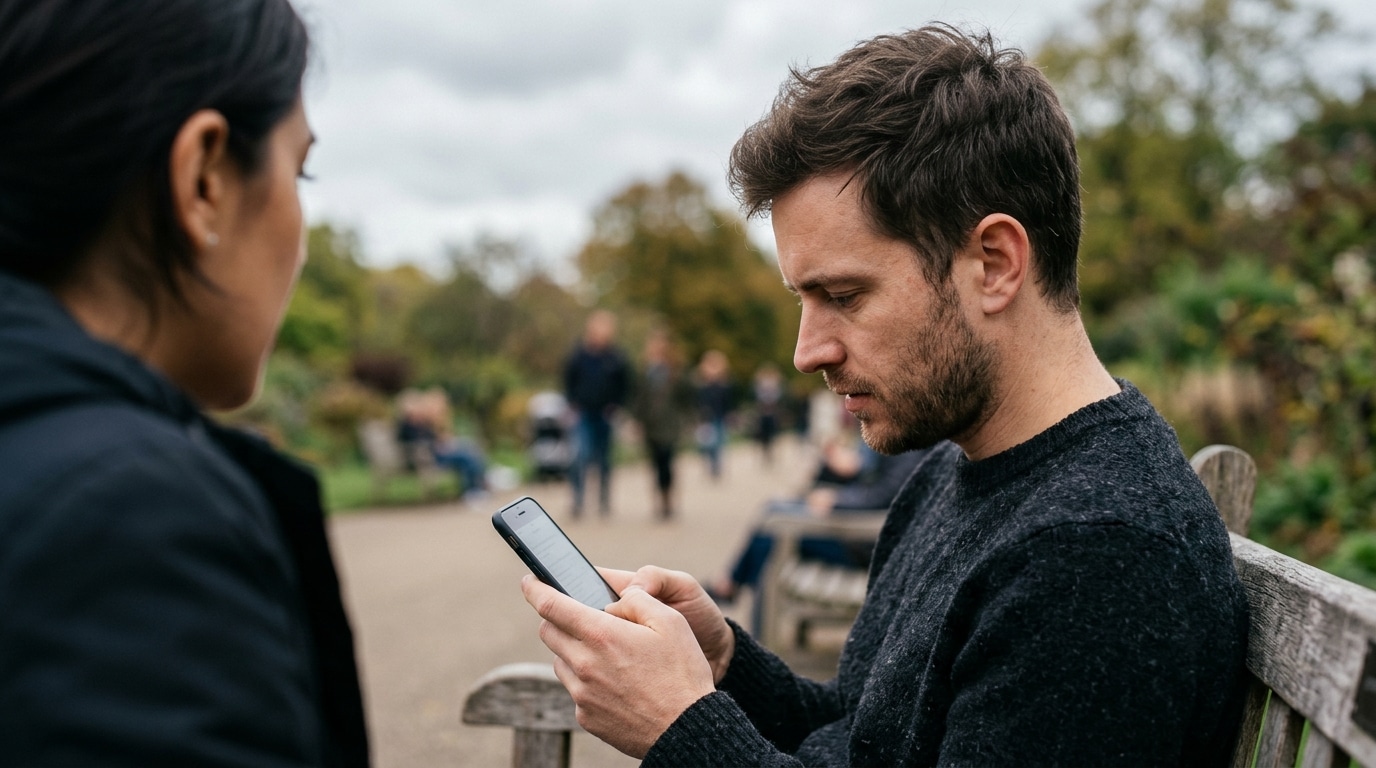
Among the most commonly cited vibe-killing behaviors in contemporary social research is persistent phone use during face-to-face interactions. A 2018 study published in the Journal of Social and Personal Relationships found that the mere presence of a smartphone on a table during conversation reduced participants’ feelings of empathic connection with their conversation partners. The phenomenon, sometimes called “phubbing” (phone snubbing), communicates to others that they are not worthy of full attention.
The issue extends beyond rudeness into the realm of psychological safety. When someone repeatedly checks their device during a gathering, it signals that something more important exists elsewhere, undermining the sense of shared presence that characterizes enjoyable social experiences. Researchers at the University of British Columbia found that people who kept phones away during meals reported significantly higher levels of enjoyment and connection than those who had devices visible.
One-Upping and Competitive Conversational Patterns
Conversational narcissism, a term coined by sociologist Charles Derber, describes the tendency to redirect discussions toward oneself. One-upping represents a particularly aggressive form of this behavior, where someone responds to another person’s story or achievement by immediately sharing a more impressive version of their own. This pattern fundamentally disrupts the reciprocal nature of healthy conversation.
The behavior damages social cohesion because it violates an implicit contract in human communication. When someone shares an experience, they reasonably expect acknowledgment and interest before the spotlight shifts. One-uppers bypass this expectation entirely, leaving the original speaker feeling diminished. Communication researchers note that this pattern often stems from insecurity rather than genuine arrogance, but the impact on group dynamics remains negative regardless of the underlying motivation.
Story Hijacking
Redirecting every conversation back to personal experiences
Dismissive Responses
Minimizing others’ feelings or experiences verbally
Excessive Negativity
Introducing pessimism into otherwise positive moments
Negativity and Chronic Complaining Behaviors
While occasional venting serves a healthy psychological function, chronic complaining represents one of the most reliable ways to drain energy from social situations. Research on emotional contagion demonstrates that negative emotions spread more readily than positive ones, meaning that one persistent complainer can disproportionately affect an entire group’s mood.
Psychologists distinguish between productive complaint, which seeks solutions, and rumination disguised as conversation, which cycles through grievances without any forward movement. The latter category particularly damages social atmospheres because it creates a sense of hopelessness and invites others into a negative emotional spiral. Studies have shown that exposure to chronic negativity can temporarily reduce problem-solving abilities in listeners, as the brain becomes occupied processing the emotional load rather than engaging constructively.
Research Insight
According to research published in the journal Emotion, people can accurately detect shifts in group emotional states within seconds, and negative shifts are identified more quickly than positive ones—a phenomenon that explains why vibe-killing behaviors have such immediate and noticeable effects.
Inappropriate Timing and Boundary Violations
Social intelligence involves reading contextual cues about what topics and behaviors suit particular moments. Bringing up heavy subjects during lighthearted gatherings, making jokes at inappropriate moments, or sharing overly personal information with relative strangers all represent timing violations that disrupt group comfort. These behaviors force others into emotional labor they did not anticipate, shifting the gathering’s energy in unwelcome directions.
Boundary violations extend beyond topic choice to include physical space and attention demands. Standing too close, touching without invitation, or monopolizing someone’s time when they have signaled a desire to circulate all create social friction. Research on personal space conducted across cultures confirms that violations of expected interpersonal distance trigger stress responses, even when people cannot consciously articulate their discomfort.
Passive Aggression and Subtle Hostility in Groups
Overt conflict is often easier to navigate than passive-aggressive behavior because it can be addressed directly. Subtle hostility—backhanded compliments, sarcastic remarks delivered with plausible deniability, strategic exclusion—creates confusion and tension that is difficult to resolve. The ambiguity itself becomes the weapon, leaving targets uncertain whether to respond or ignore the behavior.
Group dynamics research shows that passive aggression creates a chilling effect on open communication. When people witness these interactions, they often become more guarded, reducing the spontaneity and authenticity that characterize enjoyable social experiences. The vibe suffers not just for the direct target but for everyone who senses the undercurrent of hostility without being able to name it clearly.
Key Takeaway
The common thread among vibe-killing behaviors is a disruption of psychological safety and shared positive attention. Whether through distraction, competition, negativity, or aggression, these actions fracture the sense of collective experience that makes social interaction rewarding. Awareness of these patterns—in ourselves and others—represents the first step toward cultivating more consistently positive social environments.
Building Awareness for Better Social Connection
Recognizing behaviors that kill the vibe is ultimately about understanding the delicate ecosystem of human connection. Social gatherings thrive when participants contribute positive energy, practice genuine listening, and remain attuned to the needs and boundaries of others. While no one maintains perfect social awareness at all times, developing sensitivity to these dynamics allows for course correction when missteps occur. The goal is not perfectionism but rather a commitment to the quality of shared experience—an investment that research consistently shows returns dividends in stronger relationships, greater belonging, and improved emotional well-being for everyone involved.