
Foods You Should Never Eat Without Washing First
A practical guide to which produce, grains, and pantry items carry the highest contamination risks — and the safest way to clean them before eating.
Foods you should never eat without washing first represent a surprisingly broad category — one that extends well beyond the obvious muddy root vegetables most people already rinse by instinct. According to the U.S. Food and Drug Administration (FDA) and the Centers for Disease Control and Prevention (CDC), a significant proportion of foodborne illness outbreaks in the United States each year are linked to fresh produce, unprepared grains, and even packaged goods that consumers assume are safe to eat straight from the store. The pathogens behind these illnesses — including Salmonella, E. coli O157:H7, Listeria monocytogenes, and Campylobacter — can survive on the surfaces of foods during transport, storage, and handling. Understanding which foods carry the highest risk, and the correct techniques for washing them, is one of the most straightforward steps a person can take to reduce their exposure to preventable foodborne disease.
Fresh Fruits and Vegetables: The Highest-Risk Category for Washing Before Eating
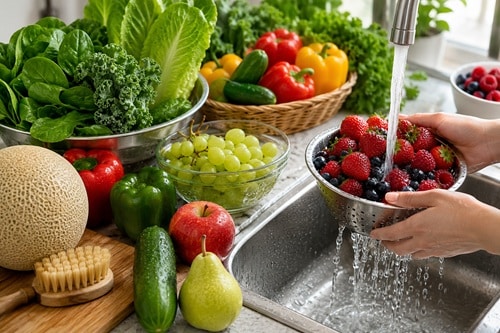
The FDA’s “Produce Safety” guidance identifies raw fruits and vegetables as the food group most frequently associated with contamination that washing can meaningfully reduce. Produce travels through multiple environments — fields, packing houses, trucks, distribution centers, and retail displays — at every stage of which it can come into contact with soil, animal waste, contaminated water, or the hands of workers. Leafy greens such as spinach, romaine lettuce, and kale are consistently identified in FDA and CDC outbreak reports as high-risk items, largely because their large surface area and textured leaves create more opportunity for pathogens to attach and persist.
Strawberries, raspberries, and other soft berries warrant particular attention. Because they are typically harvested by hand and are not peeled before eating, any contamination that occurs in the field or during packing can transfer directly to the consumer. The FDA advises rinsing all berries under cool running water immediately before consumption, not before storage, since moisture accelerates mold growth. The same logic applies to grapes, which should be separated from the stem before rinsing to allow water to reach the full surface of each individual fruit.
Firm produce such as apples, pears, cucumbers, and bell peppers should be scrubbed under running water with a clean produce brush, even when the consumer intends to peel them. The FDA specifically notes that cutting through an unwashed rind or skin can transfer surface bacteria directly to the flesh of the fruit or vegetable via the knife. This mechanism is one reason why melons — particularly cantaloupe — have been the source of several documented Salmonella and Listeria outbreaks in the United States. The netted surface of cantaloupe is especially prone to harboring pathogens in its rough texture, making thorough scrubbing under running water a non-negotiable step before cutting.
The FDA advises rinsing all produce under running water before eating, cutting, or cooking — even items labeled “pre-washed.” Soap, bleach, and commercial produce washes are not recommended for use on food; plain running water is the agency’s recommended method for consumer-level washing.
Why “Pre-Washed” and “Ready-to-Eat” Labels Do Not Eliminate Risk
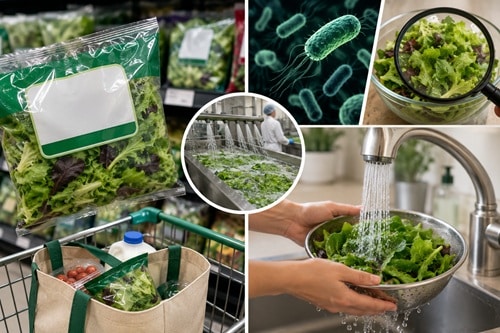
Bagged salads, pre-cut vegetables, and packaged leafy greens labeled “triple washed,” “pre-washed,” or “ready-to-eat” have become a staple of modern grocery shopping. However, food safety researchers and public health agencies caution against interpreting these labels as a guarantee of microbial safety. The USDA’s Food Safety and Inspection Service (FSIS) and the FDA both acknowledge that commercial washing processes, while effective at reducing surface contamination, cannot eliminate all pathogens — particularly if contamination occurred at the field level or if the product was exposed to contaminated water during processing.
Documented outbreaks involving pre-washed, bagged spinach — including the widely reported 2006 outbreak in the United States caused by E. coli O157:H7 that resulted in multiple deaths and hundreds of illnesses — demonstrated that commercially washed produce can still carry life-threatening pathogens. The FDA has continued to update its guidelines for fresh-cut produce in response to such events. For people with compromised immune systems, the elderly, pregnant women, and young children, the FDA and CDC advise that additional washing at home of pre-washed produce is a reasonable precaution, even though the agencies’ general consumer guidance stops short of making it a universal mandate for healthy adults.
The core issue is cross-contamination during the post-wash period. Once produce leaves a processing facility, it can be recontaminated through contact with packaging materials, grocery store surfaces, reusable shopping bags, or hands. Any washing step at the consumer level, even brief rinsing under cold running water, can remove a meaningful portion of that secondary contamination.
Root Vegetables and Underground Produce That Require Thorough Scrubbing
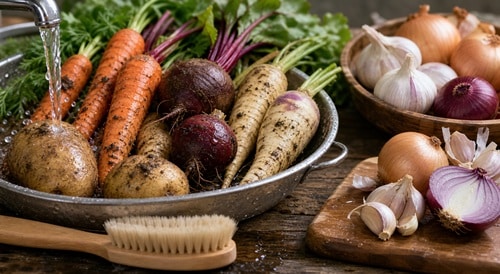
Potatoes, carrots, beets, turnips, parsnips, and other root vegetables grow in direct contact with soil, which can harbor a range of pathogens including E. coli, Salmonella, and Clostridium botulinum spores. Even when these vegetables appear visually clean after commercial processing and washing, residual soil particles — invisible to the naked eye — can remain in surface crevices. The USDA advises scrubbing root vegetables under running water with a clean produce brush before preparation, regardless of whether the skin will be removed.
Garlic and onions, though they are typically cooked before eating, are also consumed raw in many preparations — in salsa, guacamole, salad dressings, and pickled dishes — and should be rinsed before peeling or slicing. The outer layers of onions and the papery skin of garlic can carry soil and microbial contamination, which can transfer to the inner flesh during cutting. This is an underappreciated risk because both alliums are frequently handled and prepared without any washing step, despite traveling through the same soil and handling environments as other root vegetables.
Editorial categorization — not ranked by measured risk level.
Rice, Quinoa, and Grains: The Washing Step Most Home Cooks Skip
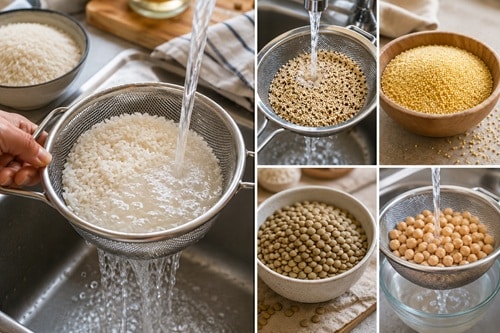
Uncooked rice, quinoa, millet, and similar grains are among the foods most commonly consumed without any washing step, despite guidance from food producers and culinary health organizations recommending rinsing. The primary concerns differ by grain type. For quinoa, a natural compound called saponin coats the outer surface of the seed. Saponins are naturally occurring chemical compounds that can cause digestive discomfort — including nausea, abdominal cramping, and bloating — when consumed in sufficient quantity. Most commercially sold quinoa is partially pre-rinsed to reduce saponin content, but the FDA and most culinary health organizations advise rinsing quinoa under cold running water until the water runs clear before cooking to further reduce any residual saponins.
For white rice, the argument for washing is somewhat different. Uncooked rice can contain surface starch, milling dust, and, in some cases, talc or glucose coatings applied during commercial processing — though the use of such coatings varies by country of origin and brand. The United Kingdom’s Food Standards Agency (FSA) has also highlighted that uncooked rice can harbor Bacillus cereus spores, a bacterium that survives cooking and can multiply when cooked rice is stored improperly. Washing rice before cooking does not address this spore risk, but it can remove surface starch that contributes to the growth medium when rice is left at room temperature. The more relevant guidance from the FSA regarding rice safety relates to storage and reheating rather than washing alone.
Dried lentils, chickpeas, and other legumes should be rinsed before soaking or cooking. These foods can carry dust, debris, and in some cases small stones or plant material from harvesting. Canned legumes, while already cooked, are typically packed in a sodium-rich liquid; the FDA and the American Heart Association both note that rinsing canned beans before use can reduce their sodium content, in addition to removing any processing residue from the can liquid.
Citrus Fruits and Tropical Produce: Washing Foods You Don’t Eat the Skin Of
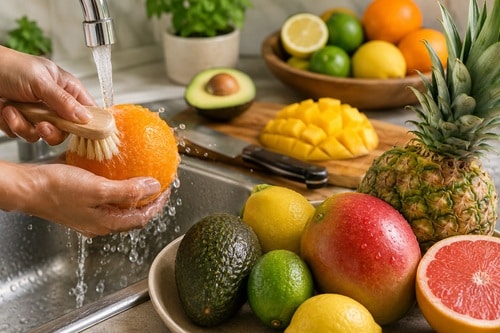
One of the most widespread misconceptions in home food preparation is the belief that fruits with inedible skins — oranges, lemons, limes, grapefruits, avocados, mangoes, and pineapples — do not need to be washed before cutting. The FDA addresses this directly in its produce safety guidance, noting that pathogens on the surface of these fruits can be transferred to the edible flesh when a knife passes through the skin. A blade that cuts through a contaminated lemon rind, for example, carries bacteria from the outer surface into the fruit’s interior, where the acid environment does not reliably neutralize pathogens such as Salmonella.
Avocados have received specific attention from food safety researchers. A 2018 study conducted by the FDA tested avocados purchased from retail locations across the United States and found Listeria monocytogenes on a portion of the avocado skins tested, with a smaller subset also showing contamination on the internal flesh. The agency used these findings to reinforce its guidance that avocados — despite their thick, inedible outer skin — should be scrubbed under running water with a clean brush before cutting. The same principle applies to mangoes, melons of all varieties, and pineapples, all of which pass through extensive handling before reaching consumers.
When a knife cuts through unwashed produce skin, it acts as a vector — carrying surface pathogens directly into the edible flesh. This mechanism applies to all fruits and vegetables with inedible or typically-discarded outer layers, including avocados, melons, citrus, and squash.
Fresh Herbs and Sprouts: Delicate Foods That Carry Disproportionate Risk
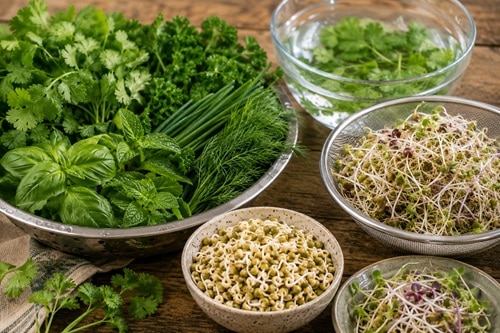
Fresh herbs — including cilantro, parsley, basil, mint, chives, and dill — are frequently added to dishes raw, directly from the bunch, without washing. Yet these herbs are grown low to the ground in conditions that expose them to soil, irrigation water, and wildlife contact. The CDC has documented multiple outbreaks of cilantro-associated Cyclospora infections in the United States, most linked to produce imported from Mexico and distributed widely through restaurant supply chains. The FDA issued an import alert on cilantro from certain growing regions in Puebla, Mexico, in 2015 following an extended multi-year investigation into recurring contamination events. Fresh cilantro and parsley in particular should be submerged in a bowl of cold water and agitated gently before rinsing under running water to dislodge any soil, insects, or microbial material from between the leaves.
Raw sprouts — including alfalfa, mung bean, clover, and radish sprouts — represent one of the highest-risk foods in the produce category, and the FDA’s guidance is notably more cautious about them than about other vegetables. The warm, humid conditions required for sprout germination are also ideal for rapid bacterial growth. The FDA and CDC advise that children, the elderly, pregnant women, and immunocompromised individuals avoid eating raw sprouts entirely, and that even healthy adults rinse them thoroughly before consumption. Cooking sprouts to an internal temperature that eliminates pathogens is the only method that definitively removes the risk, according to FDA guidance.
Mushrooms and Other Fungi: Balancing Washing Technique with Texture Concerns
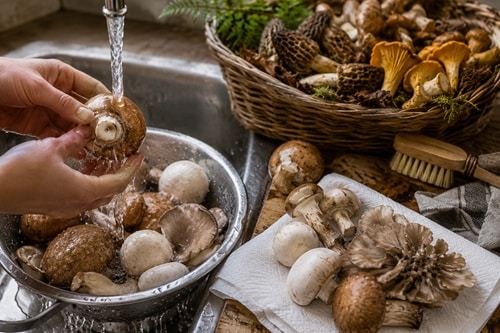
Mushrooms are grown in substrate materials — often compost, manure-based media, or wood chips — that can carry microbial contamination, and they are harvested and handled in ways that leave soil and debris on their surfaces. Despite a persistent culinary myth that mushrooms should not be washed because they absorb water and lose texture, food safety organizations including the USDA recommend rinsing mushrooms under cold running water just before cooking. The key qualifier is timing: mushrooms should be rinsed immediately before use, not ahead of time, since surface moisture does accelerate spoilage during storage. A brief rinse followed by patting dry with a clean paper towel achieves both food safety and acceptable texture in most cooking applications.
Wild mushrooms, increasingly available at farmers markets and specialty grocers, carry additional risk factors because they are foraged in outdoor environments with greater exposure to animal activity, soil microorganisms, and environmental contaminants. For wild varieties, a more thorough cleaning — using a damp brush or cloth in addition to rinsing — is advisable. It is also worth noting that the primary risk associated with wild mushrooms relates to species misidentification rather than surface contamination, but washing addresses the latter concern even when the former is not a factor.
Canned Goods and Packaged Foods: The Overlooked Washing Habit

Canned goods are a category most consumers never think to wash, yet public health organizations recommend wiping or rinsing the lids of cans before opening them. The outer surfaces of commercially produced cans travel through warehouse and retail environments where they can accumulate dust, rodent activity residue, and handling contamination. When a can opener punctures the lid, any contamination on the outer surface can fall into the food inside. The FDA’s consumer guidance on canned goods recommends washing the top of a can with soap and water before opening, drying it with a clean cloth, then opening with a clean can opener.
Eggs are another item in this category worth examining carefully. In the United States, commercially sold eggs are washed and sanitized under USDA regulations, which removes the natural protective cuticle (or “bloom”) that helps seal the eggshell against bacterial penetration. This is why U.S. eggs require refrigeration while eggs in many European countries, where washing is not standard practice, can be stored at room temperature. For U.S. consumers purchasing commercial eggs, washing at home is not recommended and is not necessary — the FDA advises against it, as additional washing of already-sanitized eggs can actually introduce bacteria through the now-porous shell. However, eggs from backyard chickens or farmers market sources that have not been commercially washed and sanitized present a different risk profile, and consumers should follow guidance from their supplier or local health authority on handling them.
Frequently Asked Questions About Washing Food Before Eating
Sources Referenced
- U.S. Food and Drug Administration (FDA) — “7 Tips for Cleaning Fruits, Vegetables,” Consumer Advice, FDA.gov
- U.S. Food and Drug Administration (FDA) — “Produce Safety,” Food Safety for Moms-to-Be and Vulnerable Populations, FDA.gov
- Centers for Disease Control and Prevention (CDC) — “Foodborne Germs and Illnesses,” CDC.gov
- Centers for Disease Control and Prevention (CDC) — Cyclospora Outbreak Investigations, Multiple Years, CDC.gov
- U.S. Department of Agriculture, Food Safety and Inspection Service (USDA FSIS) — “Washing Food: Does it Promote Food Safety?”, FSIS.USDA.gov
- U.S. Department of Agriculture, Food Safety and Inspection Service (USDA FSIS) — Safe Handling of Eggs, FSIS.USDA.gov
- U.S. Food and Drug Administration (FDA) — “FDA Survey of Retail Avocados Finds Low Levels of Listeria Contamination,” FDA.gov, 2018
- U.S. Food and Drug Administration (FDA) — Import Alert on Cilantro from Certain Regions, 2015, FDA.gov
- Food Standards Agency (FSA), United Kingdom — “Rice Safety,” FSA.gov.uk
- American Heart Association — Dietary Sodium Guidance and Canned Food, Heart.org
A Final Word on Washing, Safety, and What Goes on Your Plate
The everyday act of rinsing produce, scrubbing root vegetables, and wiping down a can before opening it may seem small, but it represents one of the most consistently documented, publicly recommended habits in consumer food safety. Foods you should never eat without washing first encompass a far wider range than most people instinctively recognize — from the obvious strawberry fresh from the punnet to the lemon being sliced for a gin and tonic, from the avocado being halved for guacamole to the bagged spinach that already claims to be clean. The guidance from the FDA, CDC, and USDA is clear and remarkably consistent across decades of research and outbreak investigation: running water, a clean brush, and the discipline to wash before cutting are among the lowest-cost, highest-impact actions available to anyone who wants to reduce the risk of preventable foodborne illness in their own home.