
Eating expired meat can pose serious health risks, but the effects depend on several factors, including how the meat was stored and how far past its expiration it is. Meat is highly perishable and provides an ideal environment for bacteria to grow, especially when temperature control is not maintained. While expiration labels offer general guidance, they do not always reflect the exact moment food becomes unsafe. Understanding how meat spoils and what happens when it is consumed past its safe period can help reduce the risk of foodborne illness and support better food safety habits in everyday situations.
What “Expired” Really Means for Meat
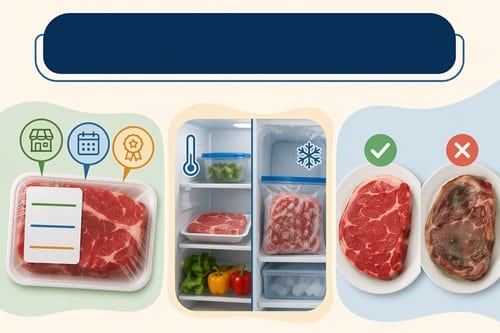
Expiration dates on meat packaging are often misunderstood, as they are not always direct indicators of safety. Labels such as “sell-by,” “use-by,” and “best-before” each serve different purposes, primarily related to quality and freshness rather than strict safety cutoffs. A “sell-by” date is intended for retailers to manage inventory, while a “use-by” date is generally the manufacturer’s estimate of when the product is at peak quality. These distinctions can create confusion, leading some to discard meat prematurely while others may consume it after it has become unsafe.
Storage conditions play a critical role in determining how long meat remains safe to eat. Proper refrigeration slows bacterial growth, but it does not stop it entirely, meaning meat can still spoil even before the labeled date if not stored correctly. Freezing can extend the shelf life significantly, but it may also affect texture and quality once thawed. Because expiration dates are based on ideal storage conditions, any deviation from those conditions can shorten the safe window for consumption, making it important to consider both labeling and handling practices together.
How Meat Spoils Over Time
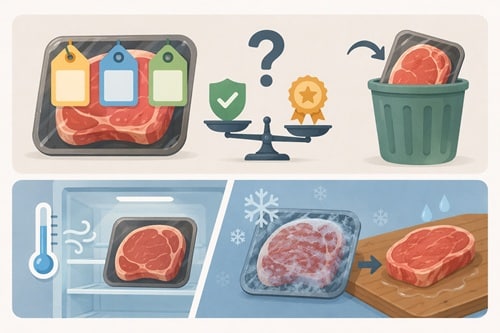
Meat spoilage is a natural process driven by the breakdown of proteins and fats, as well as the growth of microorganisms. As meat ages, enzymes begin to break down its structure, leading to changes in texture and flavor. At the same time, bacteria multiply, especially when the meat is exposed to temperatures outside the safe range. This combination of chemical and biological activity gradually transforms fresh meat into a product that is no longer safe or appealing to consume.
Environmental factors significantly influence how quickly this process occurs. Temperature is one of the most important variables, as warmer conditions accelerate bacterial growth, while cooler temperatures slow it down. Exposure to air can also contribute to spoilage by promoting oxidation and allowing contaminants to come into contact with the meat. In the early stages, spoilage may be subtle, but as time passes, the changes become more pronounced, increasing the likelihood of harmful bacteria reaching levels that can cause illness.
Signs That Meat Has Gone Bad

Identifying spoiled meat often begins with visual inspection. Fresh meat typically has a consistent color and firm texture, while spoiled meat may appear dull, discolored, or develop a slimy surface. The presence of mold or unusual spots is a clear indication that the meat should not be consumed. These visible changes occur as bacteria and other microorganisms break down the meat’s structure, altering its appearance in noticeable ways.
Smell and texture also provide important clues about spoilage, though they are not always reliable on their own. Spoiled meat often produces a sour, ammonia-like, or otherwise unpleasant odor that signals bacterial activity. The texture may feel sticky or tacky, indicating that decomposition is underway. However, some harmful bacteria do not produce strong odors or visible changes, which means meat can still be unsafe even if it appears normal. For this reason, relying solely on sensory cues can be risky, and proper storage and timing should always be considered.
What Happens in the Body After Eating Expired Meat

When expired meat is consumed, harmful bacteria can enter the digestive system and begin to multiply. These bacteria may include strains that produce toxins, which can irritate the lining of the stomach and intestines. As the body detects these harmful substances, it activates defense mechanisms to remove them, often leading to symptoms associated with foodborne illness. The severity of the reaction depends on the type and amount of bacteria present, as well as the individual’s overall health.
Symptoms typically develop within hours to a few days after consumption, depending on the specific contaminant involved. Common reactions include nausea, vomiting, diarrhea, and abdominal cramping, all of which are the body’s way of expelling harmful organisms. In some cases, fever and fatigue may also occur as the immune system works to fight off the infection. While many instances are mild and resolve on their own, more severe cases can develop if the bacterial load is high or if the body struggles to respond effectively.